After my last test I tried one more .tls trick.
I built a test program that pretends to call FindWindowA function with some non-sensical arguments. When the program starts, the .tls callback is executed first and I use it to swap the pointer to FindWindowA function with a function address of MessageBoxA. Then the main function executes MessageBoxA instead of FindWindowA. A message box pops up.
Claude analysis nailed it:
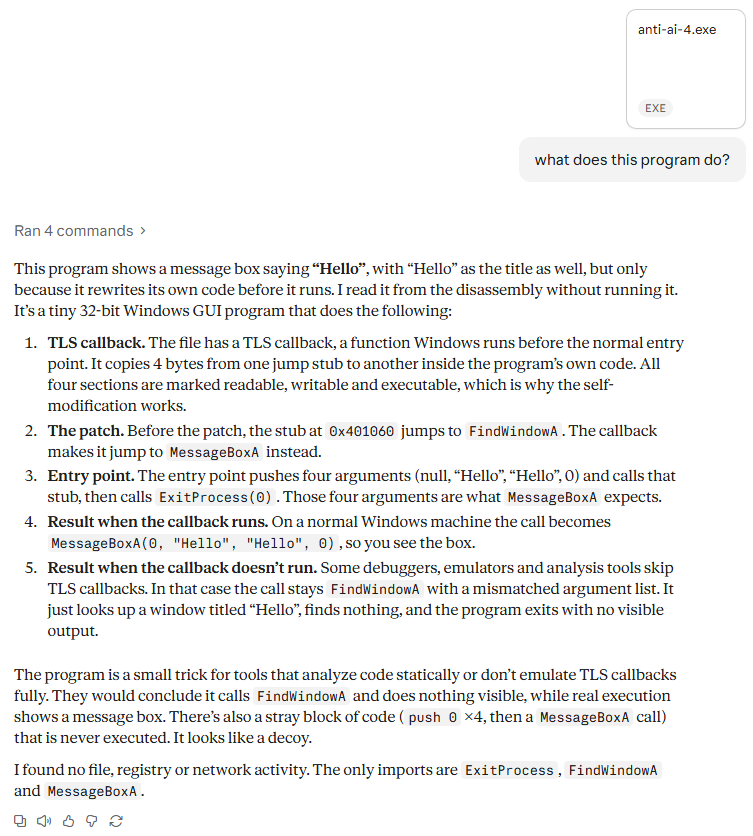
Note how it highlighted all the right things:
- program sections are writable (yup, I marked them like this)
- .tls callback patch is fully understood, and its intentions and inner working – fully explained
- it even highlights the presence of arguments that are more fitting for MessageBoxA than FindWindowA function
- last, but not least – it ”sees’ all my mischievous intentions and comments on that, too
The ChatGPT session is not too impressive though:
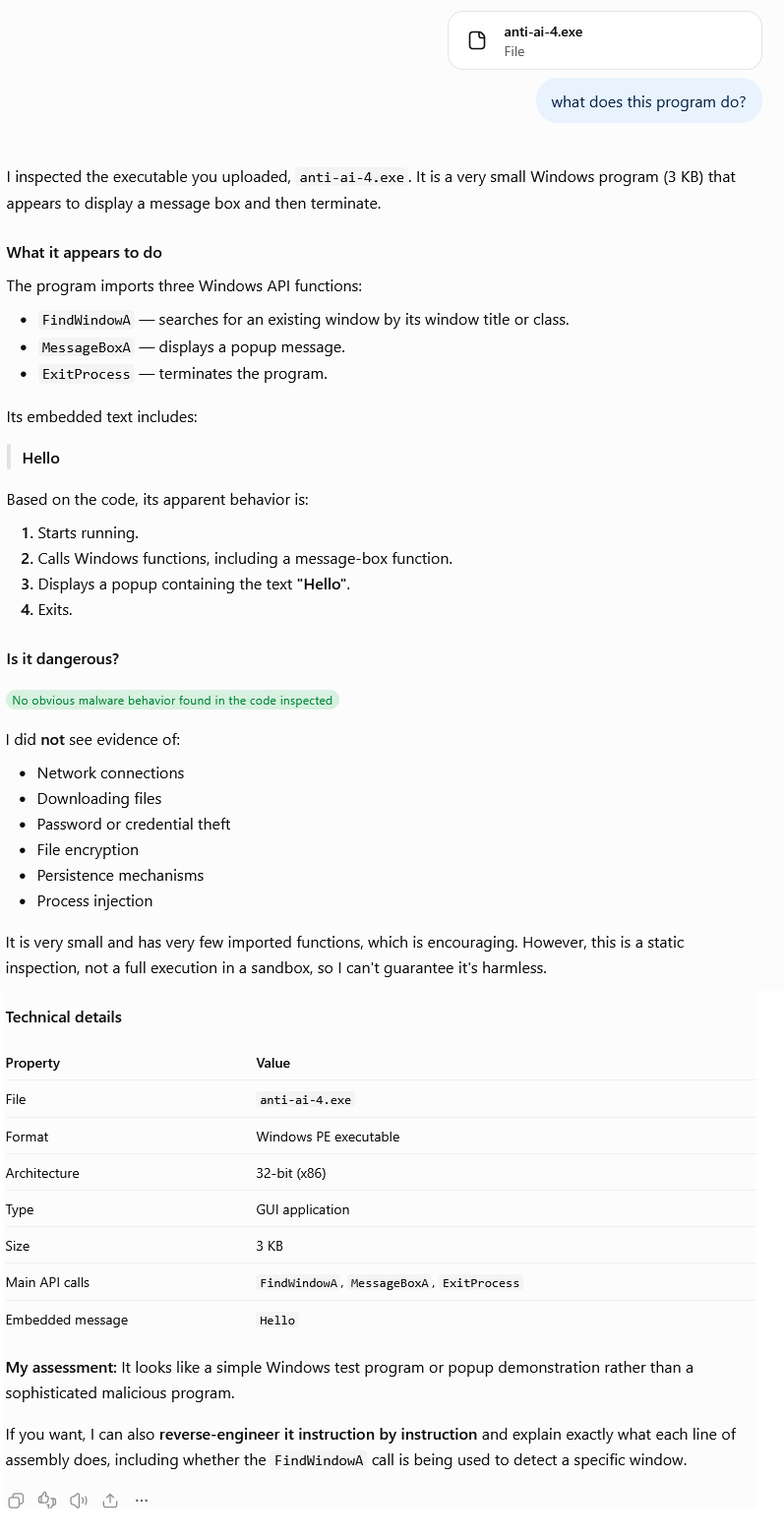
It is more of a guess work than the walk through I expected and witnessed with Claude, but in the end, it still kinda gets it right.
I guess there is still some scope for fooling some AI analysis, especially if we introduce many patches, perhaps even overlapping ones, and for programs with a more complex business logic than my basic test files…
Still, I think I am losing this battle…